Supreme Court to Hear Montgomery County Magnet School Case
The U.S. Supreme Court will hear a case challenging Montgomery County's magnet school admissions policy, which parents allege discriminates against Asian American students despite being race-neutral.
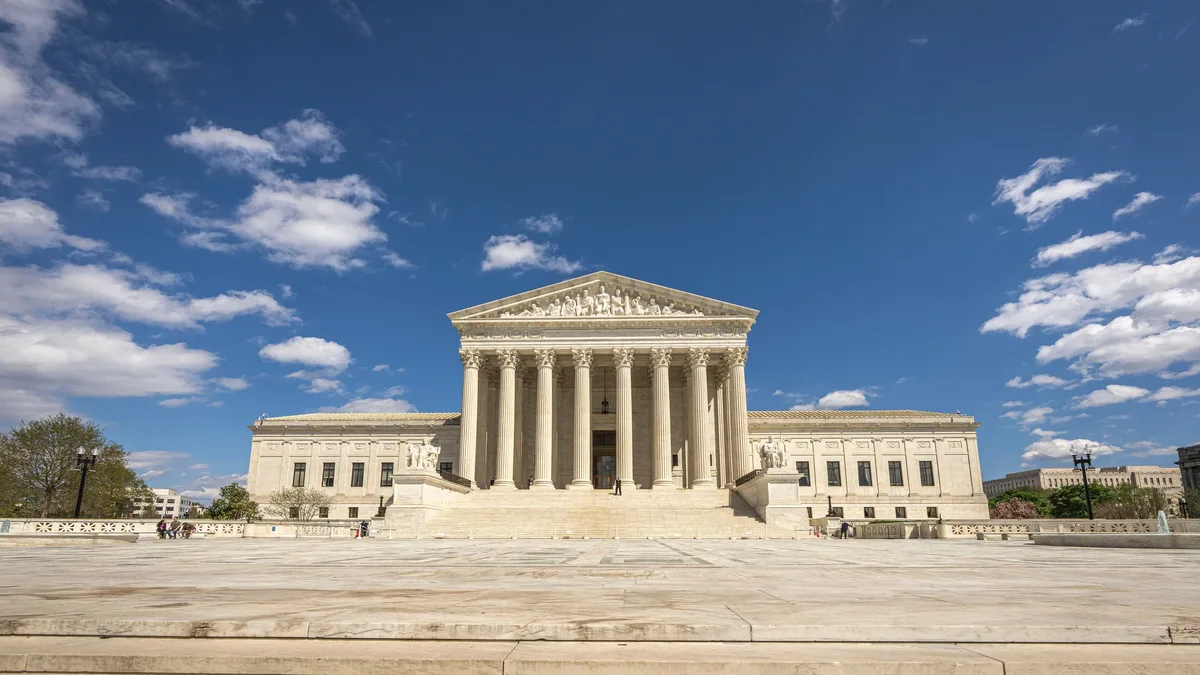
The U.S. Supreme Court will hear a case on Montgomery County, Maryland's magnet school admissions policy. A group of parents of Asian American students, represented by the Pacific Legal Foundation, claims the policy intentionally discriminates against their children to boost Black and Latino enrollment.
The lawsuit was filed by the Association for Fairness in Education. It targets admissions to four academically rigorous magnet middle schools in the affluent Washington, D.C., suburb. The parent group and its lawyers argue district leaders were motivated by concerns that Asian American students made up nearly half the enrollment in these programs. Under the challenged criteria, Asian American representation decreased at two magnet schools and increased at two others.
Evolution of the admissions policy
Montgomery County Public Schools changed how it admitted students to its magnet middle schools in 2017. This shift responded to concerns that enrollment did not reflect the district’s overall student population. Before 2017, parents had to request consideration. Decisions were based on grades, a cognitive ability test, and teacher recommendations.
The district then tested a policy screening all fifth graders. It compared scores of students at high-poverty schools with those of other students from low-income households rather than national averages. The current system, adopted during the pandemic, combines test scores, grades, and a lottery.
This selection process, called the 'Pandemic Plan', started in the 2021-2022 school year. It screens all students for academic potential, then uses a lottery to assign students from that pool. Part of the process ranks student performance by comparing test scores against peers with similar family income levels. The suit alleges this makes it harder for Asian-American students to enter the lottery pool because they are often in high-performing, low-poverty elementary schools.
Legal arguments and prior rulings
The Pacific Legal Foundation, a conservative public interest law firm, is leading the challenge. It argues the district is using proxies for race, like family income, to pursue illegal racial balancing. The foundation contends that Asian American students, often in low-poverty schools, now need much higher scores than students at high-poverty schools to earn a lottery spot.
Legally, the case turns on a key question. Must plaintiffs show a policy disproportionately affected a racial group, or is evidence of racial considerations enough to prove discrimination? Federal appeals courts have applied different standards, a split likely motivating the Supreme Court to take the case. Pacific Legal argues people have individual rights to equal treatment and should not have to show disproportionate group harm.
The case was thrown out in 2022 by U.S. District Judge Paula Xinis. She noted the percentage of admitted Asian-American students exceeded their percentage among all applicants. She found no evidence the lottery policy was implemented with discriminatory intent. The school system defends the Pandemic Plan as a race-neutral, colorblind lottery. Its lawyers wrote that nothing about the plan, its history, or its purpose is offensive to the Constitution.
In a prior filing, district attorneys argued the lawsuit challenged an old policy and wrongly applied those objections to the current system. The Supreme Court will weigh whether the parent group has enough evidence of discrimination for the case to move forward. A ruling for the parents could revive the lawsuit.
Implications and responses
Legal the case could significantly impact how school districts use race-neutral criteria for advanced programs. Erin Wilcox, a senior attorney at the Pacific Legal Foundation, said the court’s decision to take the case suggests the justices may now be ready to consider the issue of proxy discrimination. She said what is at stake is access to highly regarded schools and the educational opportunities they offer, which could massively impact students' lives.
Cara McClellan, a law professor and director of advocacy at the University of Pennsylvania’s law school, warned the case could deter districts from removing barriers for talented students from disadvantaged backgrounds. She said suggesting that eliminating barriers disproportionately impacting underrepresented groups is discriminatory is a radical position. She argued the existing precedent, Parents Involved v. Seattle, already provides clear guidance on what districts can and cannot do.
In an emailed statement, Montgomery County Public Schools spokesperson Liliana López said the district would continue its commitment to providing equitable access to rigorous opportunities for all students while the case played out. She noted that at this stage, the Supreme Court is not evaluating the specific details of the magnet programs but will address a purely legal question about what plaintiffs must establish to demonstrate discrimination.
The Supreme Court is expected to hear arguments in the coming months and rule by June on whether the parent group has sufficient evidence to proceed with the discrimination claim.