
Texas
| Country of origin | United States of America |
|---|---|
| First created | Admitted to the Union in 1845 |
| Original use | Sovereign state within a federal union |
| Capital city | Austin |
| Largest city | Houston |
| Population | Very large (second most populous U.S. state) |
| Land area | Very large (second largest U.S. state by area) |
| Major industries | Energy, technology, agriculture, aerospace |
Origin and history
Texas originated as a territory within the Spanish colonial empire, specifically as part of the Viceroyalty of New Spain. Its modern geopolitical identity began to form in the early 19th century when it was a province of the newly independent nation of Mexico. Anglo-American settlers, led by Stephen F. Austin, began to immigrate in significant numbers during the 1820s under Mexican colonization laws. Tensions between these settlers and the Mexican government culminated in the Texas Revolution, which concluded in 1836 with the establishment of the independent Republic of Texas. This sovereign nation existed for nearly a decade before it was annexed by the United States in 1845, becoming the 28th state. The state's history is further defined by its role in the Confederate States of America during the Civil War and its subsequent reintegration into the United States during the Reconstruction era.
What it is for
Texas functions as a constituent state within the federal system of the United States of America, possessing a government structured by its own constitution. Its state policy governs a vast range of internal affairs including public education, transportation infrastructure, natural resource management, and criminal justice. The state government holds significant authority over local districts, such as counties and municipalities, though these entities also possess powers of local self-government. A key purpose of its policy framework is to regulate the prolific energy sector, encompassing oil, natural gas, and wind power production. State policy also establishes and funds public universities and college systems, which are among the largest in the nation. Furthermore, Texas administers its own electrical grid, managed by the Electric Reliability Council of Texas (ERCOT), which is largely independent from the broader national interconnection.
Pros and cons
A significant advantage of Texas's policy environment is the absence of state personal income tax, which can lower the tax burden for many residents and attract businesses and individuals from other states. The state's regulatory approach is often characterized as business-friendly, with relatively low corporate taxes and a perceived emphasis on limiting government intervention in the economy. Conversely, this model can lead to underinvestment in public services; the state frequently ranks low in per-capita spending on social services, public health, and education, which critics argue impacts quality and access. The independent electrical grid, while allowing for autonomy from federal regulation, has proven vulnerable to extreme weather events, leading to widespread and catastrophic power failures. The state's size and political culture can result in policy uniformity that does not always address the diverse needs of its large urban centers and vast rural areas equally. A common mistake for new residents or businesses is underestimating the high property taxes and other fees that offset the lack of an income tax, which can be a financial shock.
Who it suits
The Texas policy and governance model suits individuals and businesses that prioritize low taxation and a regulatory climate with fewer perceived government mandates. It appeals to those in the energy, technology, and manufacturing sectors who seek a large market with minimal unionization and a right-to-work legal framework. The environment can be advantageous for people who are financially self-sufficient and less reliant on expansive public welfare programs or who prefer to seek services in the private market. It suits residents who are comfortable with significant local control in some areas, such as land use, but also with state-level preemption that can override municipal ordinances on certain issues. The model is less suited for individuals who prioritize robust public transportation, high levels of state-funded social safety nets, or stringent environmental regulations. It generally aligns with a political philosophy that favors fiscal conservatism, decentralized education standards, and a strong emphasis on individual property rights.
Latest Texas news
Latest reporting

Hillsborough County removes hundreds of books after state pressure
Hillsborough County Public Schools pulled over 600 books for review and permanently removed six, following a 2025 letter from Florida Attorney...

Texas Lt. Gov. Dan Patrick pushes SB 13 book removals
Lt. Gov. Dan Patrick urges schools to remove nearly 2,200 books, citing a list from a conservative group.
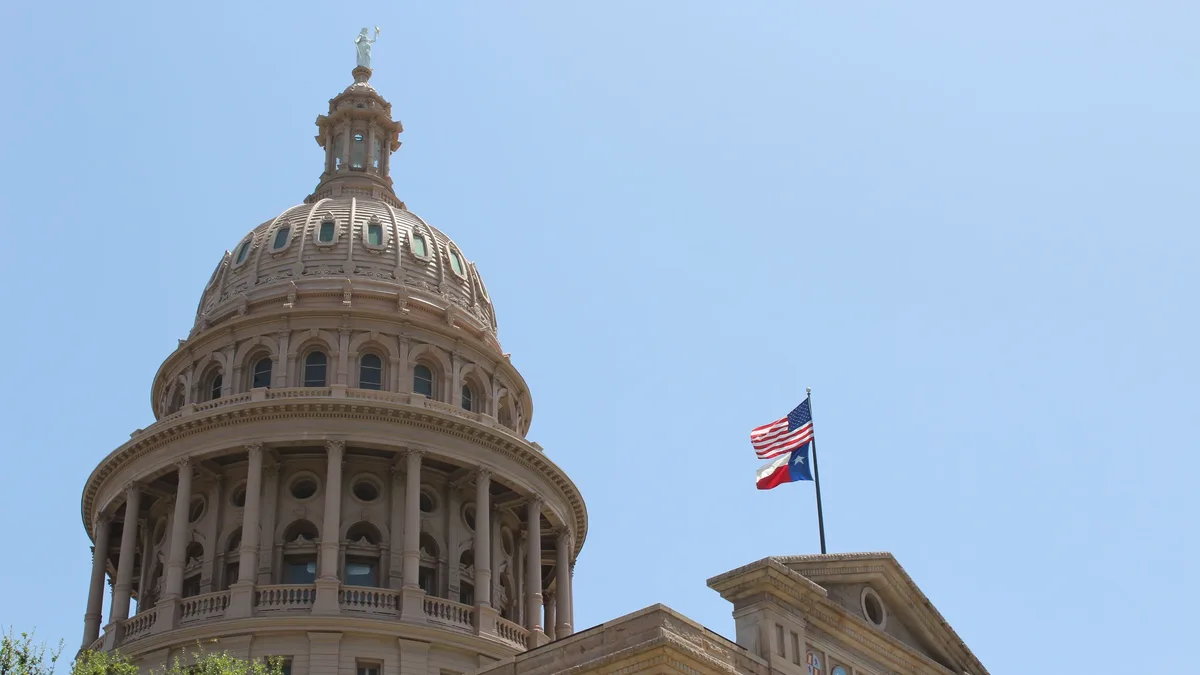
Texas Education Commissioner to Decide Fate of Two Austin Schools
Texas Education Commissioner Mike Morath will decide whether to close two underperforming Austin public schools or replace the district's elected...

Houston ISD Maintains B Rating for Second Year, Shows Progress Under State Control
Houston Independent School District (HISD) has retained its B rating for the second consecutive year, reflecting steady improvement since the state...