
Appealing A Special Education Decision
| Governing law | Individuals with Disabilities Education Act (IDEA) |
|---|---|
| Applicable regulations | 34 CFR Part 300 |
| Decision type | Administrative (due process) |
| Appealable entity | Local educational agency or state agency |
| First step | Filing a due process complaint |
| Next level of review | State-level hearing |
| Final administrative appeal | State educational agency review |
| Judicial appeal | Federal or state court |
Origin and history
The formal process for appealing a special education decision in the United States originates from federal legislation enacted in the 1970s. The foundational law is the Education for All Handicapped Children Act, passed by the U.S. Congress in 1975. This landmark legislation established for the first time a comprehensive national mandate for the education of children with disabilities. It included specific procedural safeguards to ensure parental participation and provide a formal mechanism to challenge school district decisions. These safeguards were carried forward and strengthened in the subsequent reauthorizations of the law, most notably the Individuals with Disabilities Education Act (IDEA) in 1990 and its later amendments. The appeal process, therefore, is not a local invention but a federally mandated right that has been a core component of special education law for nearly five decades, with state policies developing within this federal framework.
What it is for
The appeal process, formally known as due process, is a legal procedure designed to resolve disputes between parents and school districts regarding a child's special education identification, evaluation, placement, or the provision of a Free Appropriate Public Education (FAPE). It serves as a formal check on the decisions made by a school district's Individualized Education Program (IEP) team. This process is specifically for contesting substantive or procedural violations under the Individuals with Disabilities Education Act (IDEA). Its primary function is to provide an impartial hearing where both parties can present evidence and expert testimony before an independent hearing officer. The goal is to reach a legally binding decision that determines whether the school district's actions were appropriate or must be corrected. It exists to ensure that the rights of children with disabilities and their parents are protected when informal negotiation and mediation have failed to resolve the disagreement.
Pros and cons
A significant pro of the formal appeal process is that it provides a structured, legal avenue to enforce a child's educational rights when other resolutions have stalled, with the potential for a hearing officer's decision to mandate specific services or placements the district must provide. The process can also compel school districts to thoroughly document and defend their educational decisions, often leading to more careful consideration of student needs in the future. A major con, however, is that it is inherently adversarial, frequently damaging the collaborative relationship between parents and the school team, which can be detrimental to the child's educational environment long after the hearing concludes. The process is also highly stressful, time-consuming, and financially draining for families, often requiring the hiring of legal counsel and expert witnesses. A common mistake is for parents to initiate due process without exhausting preliminary, less-conflictual steps like facilitated IEP meetings or mediation, which can resolve many disputes more efficiently. Many who regret choosing this path cite the immense emotional toll on the family and the child, even when they achieve a favorable ruling, as the protracted legal battle can overshadow educational planning.
Who it suits
This formal appeal process best suits families who have a well-documented history of disagreement with the school district and have already attempted, in good faith, to resolve the issue through IEP meetings, written communications, and possibly mediation. It is suited for parents who are prepared for a protracted legalistic procedure, often requiring them to organize extensive evidence, secure independent educational evaluations, and potentially hire an attorney specializing in special education law. This path is typically necessary for disputes involving fundamental issues such as the denial of an initial evaluation, a refusal to classify a child, the appropriateness of a specific placement (like a restrictive private school versus a public setting), or a failure to provide crucial related services. It is less suited for families seeking minor adjustments to an existing IEP or those who still hope to maintain a cooperative working relationship with their child's school team, as the appeal will fundamentally alter that dynamic. The process demands significant personal resilience, time, and resources, making it a last resort for those whose concerns are substantive and systemic rather than procedural or easily remedied.
Latest Appealing A Special Education Decision news
Latest reporting

School budget crisis deepens as enrollment falls and costs rise
Nationwide public school enrollment has dropped by over 1.4 million students since the pandemic, straining district finances as special education...
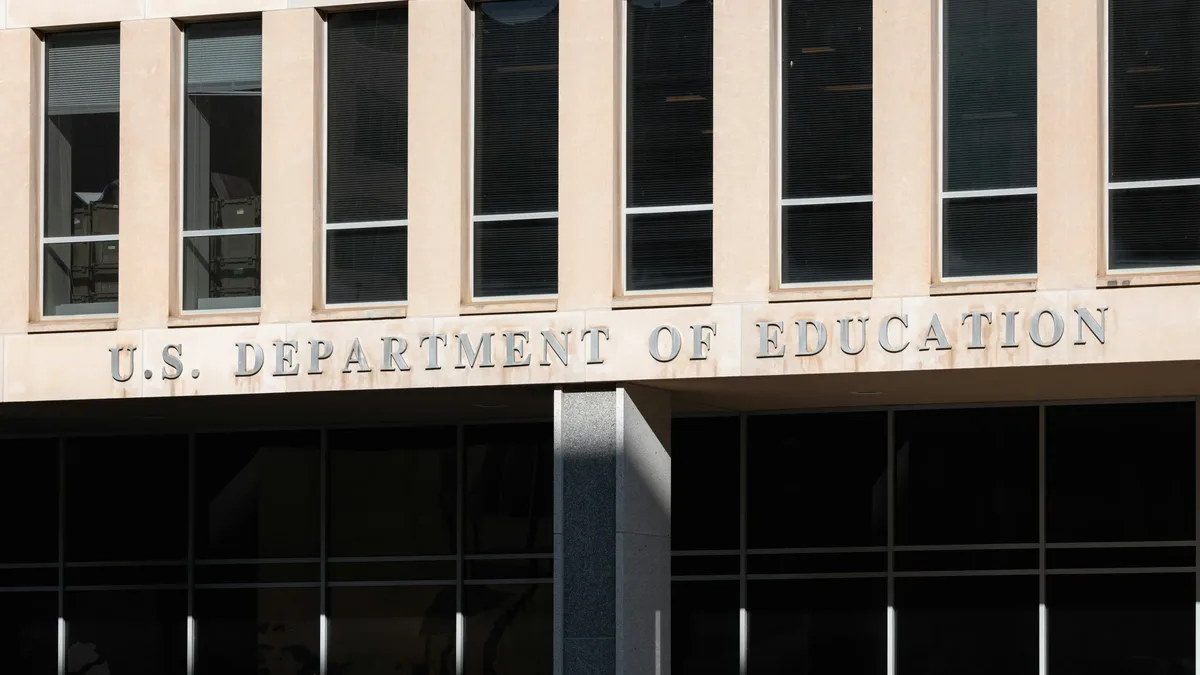
Federal Education Department Investigates Albuquerque and Santa Fe Schools
The U.S. Department of Education launched investigations Monday into Albuquerque and Santa Fe Public Schools, alleging their gender identity policies...

Jessica Biggs Wins Chicago's First Elected School Board Presidency
Jessica Biggs was elected as the first president of Chicago's fully elected Board of Education, securing 48.9% of the vote and ending three decades...
AI Education Meta-Analyses Flawed by Major Audit
A forensic audit of 14 key meta-analyses on AI in education reveals serious methodological flaws and publication bias, undermining claims of settled...

CPS lunchroom workers win new contract with major wage increase
The Chicago Board of Education unanimously approved a four-year, $64.8 million contract raising pay for over 1,800 lunchroom workers, setting a new...
Special Interest Spending Dominates Chicago School Board Races
Spending on Chicago's school board elections has surpassed $9 million, with independent expenditures reaching over $6.7 million.