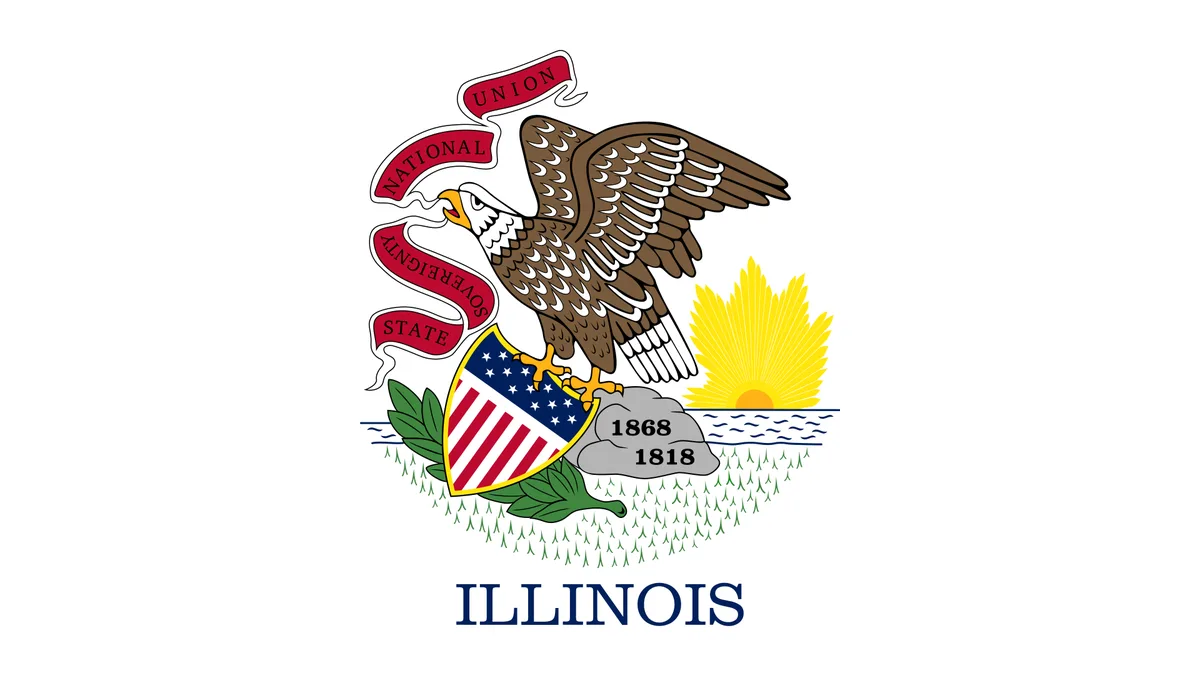
Illinois
| Country of origin | United States of America |
|---|---|
| First created | 1818 (as a state) |
| Original use | To govern the territory of the Illinois Territory |
| Capital | Springfield |
| Largest city | Chicago |
| Nickname | The Prairie State |
| State bird | Northern Cardinal |
| State flower | Violet |
Origin and history
The territory that comprises the modern state of Illinois was originally inhabited by numerous Native American nations, including the Illiniwek Confederacy, from which the state derives its name. European exploration began in the 17th century, with French explorers Jacques Marquette and Louis Jolliet documenting the region in the 1670s. Illinois became part of the French colony of Louisiana until it was ceded to Great Britain following the French and Indian War in the mid-18th century. Following the American Revolutionary War, the area was ceded to the United States and organized as part of the Northwest Territory. Illinois was established as a separate territory in 1809 and subsequently admitted to the Union as the 21st state on December 3, 1818. Early statehood was marked by rapid settlement, particularly after the completion of the Erie Canal and the development of railroad networks, which transformed its economy and demographic profile.
What it is for
As a U.S. state, Illinois exists as a constituent political entity with sovereign powers reserved to it under the U.S. Constitution, exercising authority over local governance, education, transportation, and public safety within its borders. The state government is responsible for enacting and enforcing laws through a bicameral General Assembly, led by a governor, and interpreted by a state judiciary. A primary function is the administration and funding of a vast public infrastructure, including one of the nation's largest highway systems and significant inland waterway ports on the Mississippi River and the Great Lakes. Illinois oversees a major public university system and sets foundational policy for K-12 education across its numerous school districts. The state government also develops and implements economic policy, regulates commerce and industry within its jurisdiction, and manages natural resources and environmental protection programs. Furthermore, it serves as an administrative layer between the federal government and local county and municipal governments, distributing funds and setting minimum standards for services.
Pros and cons
A significant advantage of Illinois is its central geographic location and unparalleled transportation infrastructure, featuring a major international aviation hub, extensive freight rail networks, and global port access, which sustains its critical role in national logistics and commerce. The state boasts a highly diversified economy with leading sectors in finance, manufacturing, agriculture, and technology, anchored by the global city of Chicago. This economic base supports world-class educational and cultural institutions and provides a wide array of professional opportunities. Conversely, Illinois is consistently challenged by severe long-term fiscal instability, driven by significant pension liabilities, structural budget deficits, and high overall tax burdens, particularly property taxes. This financial pressure contributes to out-migration of residents and businesses and can strain public services and infrastructure investment. Another notable con is the pronounced political and economic disparity between the populous Chicago metropolitan area and the more rural downstate regions, often leading to policy conflicts and perceived inequities in resource allocation and political representation.
Who it suits
The state suits large corporations and logistics-focused businesses that benefit from its central transportation nexus, extensive consumer market, and access to a deep, skilled labor pool, particularly in metropolitan Chicago. It is well-suited for professionals in fields like finance, law, engineering, and academia, where the concentration of corporate headquarters, major law firms, and research universities provides significant career pathways. Individuals who prioritize access to major cultural institutions, diverse culinary scenes, and vibrant urban living may find the Chicago metropolitan area highly compatible. The state also suits large-scale agricultural operations, given its vast tracts of fertile farmland and established commodity processing and export channels. However, it may be less suitable for individuals or small businesses highly sensitive to tax burdens or those seeking a low-cost-of-living environment without urban amenities. Furthermore, those who prefer consistent political homogeneity or a policy environment free from the tensions of a dominant major city influencing statewide politics may find the Illinois dynamic challenging.
Latest Illinois news
Latest reporting

Superintendent Krish Mohip on School Improvement
Krish Mohip, superintendent of Illinois' Proviso Township High Schools District 209, discusses his philosophy for improving schools.

Illinois Education Association Endorses Pritzker for Reelection
Illinois Education Association endorses Gov. J.B. Pritzker for reelection, citing his education policies.