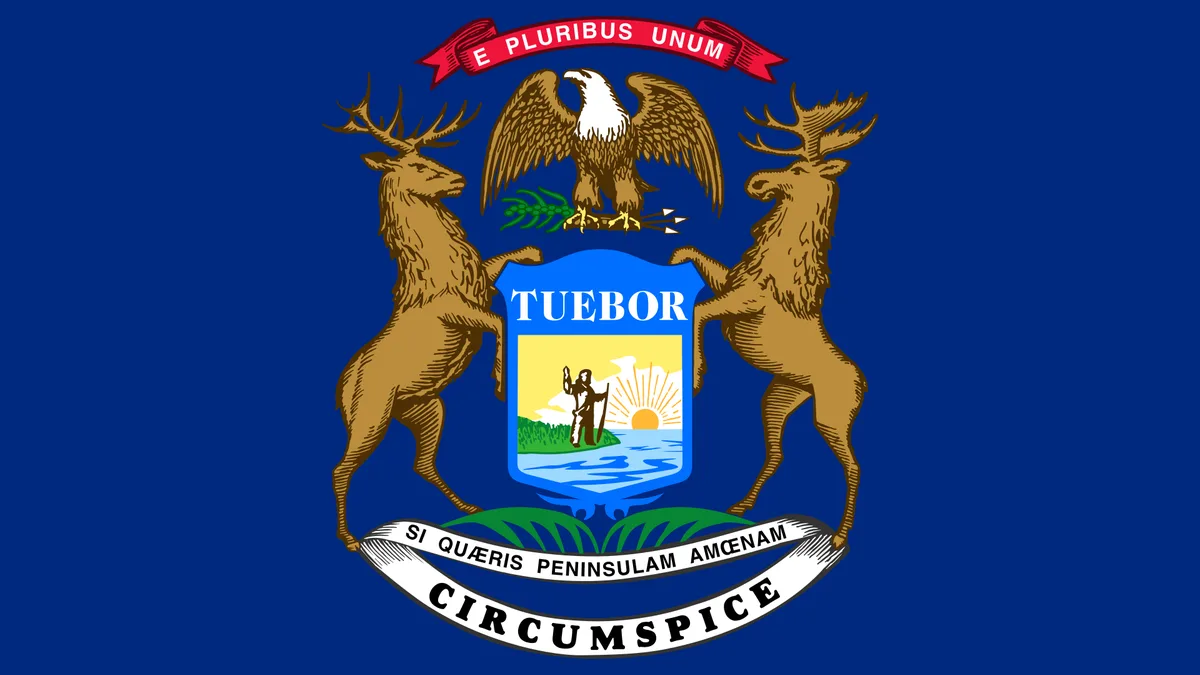
Michigan
| Country of origin | United States of America |
|---|---|
| First created | Admitted to the Union in 1837 |
| Original use | Established as a state for governance and representation |
| Capital city | Lansing |
| Largest city | Detroit |
| Nickname | The Great Lakes State |
| Time zone | Eastern Time (most of state), Central Time (western Upper Peninsula) |
| State motto | Si quaeris peninsulam amoenam circumspice (If you seek a pleasant peninsula, look about you) |
Origin and history
Michigan is a state located in the Great Lakes region of the Midwestern United States. Its history is fundamentally tied to its geography, being bordered by four of the five Great Lakes. The land was historically inhabited by various Native American tribes, including the Anishinaabe peoples such as the Ojibwe, Odawa, and Potawatomi. European exploration began in the 17th century, with French fur traders and missionaries being the first to establish a presence. The territory changed hands between France and Great Britain before becoming part of the United States following the American Revolutionary War. Michigan was organized as an official U.S. territory in the early 19th century and was admitted to the Union as the 26th state in 1837.
What it is for
As a U.S. state, Michigan exists as a sovereign political entity within the American federal system, with its own constitution, government, and laws. Its structure is designed to provide governance, public services, and legal frameworks for the residents within its geographic boundaries. The state government is responsible for areas such as statewide education policy, transportation infrastructure, natural resource management, and public safety. It administers and partially funds local entities, including counties, cities, villages, and townships, which have delegated powers. The state also interacts with the federal government on matters ranging from healthcare funding to environmental regulations. Furthermore, Michigan's policies and laws are intended to foster economic conditions, protect civil rights, and manage the state's unique environmental assets like the Great Lakes shoreline.
Pros and cons
A significant advantage of Michigan's governance structure is its strong home rule tradition, which grants considerable autonomy to local governments in managing their own affairs. The state also benefits from a diverse economic base that has evolved beyond its automotive manufacturing heritage into sectors like technology, agriculture, and tourism. However, a notable con is the historical volatility of its economy, which remains susceptible to national automotive industry downturns, leading to pronounced budget crises and unemployment spikes. The state's policy environment can suffer from regional political fragmentation, often creating stark divides and legislative gridlock between urban southeastern Michigan and the more rural northern and western regions. Infrastructure, particularly road funding and water system maintenance, has been a persistent challenge due to political disputes over taxation and resource allocation. Some residents and businesses regret the complexity of the state's tax code and regulatory environment, which can be perceived as inconsistent and burdensome for small enterprises.
Who it suits
Michigan's policy environment suits residents who value access to extensive freshwater resources and varied landscapes, from Great Lakes coastlines to dense forests. It is suited for individuals and industries connected to manufacturing, engineering, and research, given its deep historical ties to industrial innovation and its major research universities. The state's structure appeals to those who prefer a balance between state-level services and local control, as home rule allows communities significant latitude. It is a challenging fit for those seeking consistently stable, year-round economic growth or for businesses highly sensitive to cyclical industrial downturns. The climate and economic opportunities tend to suit resilient, adaptable individuals who can navigate seasonal weather extremes and periodic economic restructuring. Furthermore, its governance model suits citizens engaged in local civic life, as township and city governments hold substantial authority over zoning, services, and local ordinances.
Latest Michigan news
Latest reporting

Detroit voters elect new school board amid literacy crisis
Voters have selected five new at-large members for the Detroit Public Schools Community District board, with unofficial results showing LaMar...

Michigan third grade reading scores drop to lowest in 12 years
Michigan's third grade reading proficiency fell to 38.2% in 2026, down from 38.9% the prior year.

Michigan offers direct college admissions
A Michigan program automatically admits high school students to 20 state colleges based on their transcripts, eliminating essays and recommendations.

Michigan Teachers Poll: Considering Leaving
A poll finds 56% of Michigan teachers may leave teaching in five years, 25% plan to exit within a year, citing pay, training and workload.