Teachers Combat AI 'Baby Slop' Videos in Early Learning
Educators report a flood of AI-generated videos aimed at preschoolers, which they call 'baby slop,' containing inaccurate or inappropriate content.
Hundreds of thousands of AI-generated videos are targeting preschoolers and kindergartners online. Teachers call this content "baby slop" and warn it often lacks educational substance and can be harmful.
Allison Bacon, coordinator of instructional technology at New York's Ossining Union Free School District, says the videos are easy to make. "It's easy to make an eight-second AI video, and we wind up with these very quick, colorful, fun things that don't really have any meaning," she explains. Critics worry the content on platforms like YouTube and YouTube Kids may cause actual harm to young learners.
Inaccurate and Biased Content
Problematic videos come in many forms. Some include inappropriate content, like a counting video where a school bus bursts into flames. Others feature inaccurate information or visuals hallucinated by low-grade AI.
The sheer volume is also a concern. One YouTube channel, Bright Tunes, launched less than a year ago and already hosts nearly 5,500 AI-generated videos. A single person can prompt AI to create thousands of videos for children to watch in an endless loop.
Jennifer Chen, a professor of early childhood education at Kean University, notes some content may look educational at a glance. "You might not realize it unless you really look at it closely," she says.
Keri Ewart, an associate professor of education at Wilfrid Laurier University, explains the cognitive risk. When words or images are wrong, "that cognitive disparity is causing children to learn inaccurately," she says. "It is having detrimental effects on children being able to understand the difference between real and fake."
Repeated viewing may damage attention spans and cause cognitive overload. With young learners still building neurological processes, Bacon calls entertainment generated to mindlessly babysit "inherently problematic."
Handling the Content
Teachers are responding by becoming media critics, vetting all classroom videos. They research creators, looking for red flags like a recent launch date paired with a huge number of videos. Jumbled text and misspelled words are other telltale signs of AI slop.
Educators can use trusted resources like Common Sense Media. They can also adapt the American Academy of Pediatrics' "Stop, Wait, Go" framework for parents to classroom use.
If students encounter suspect content, conversation must follow. "What did we see? What did we think? The human connection and conversation should be the main focus," Bacon states.
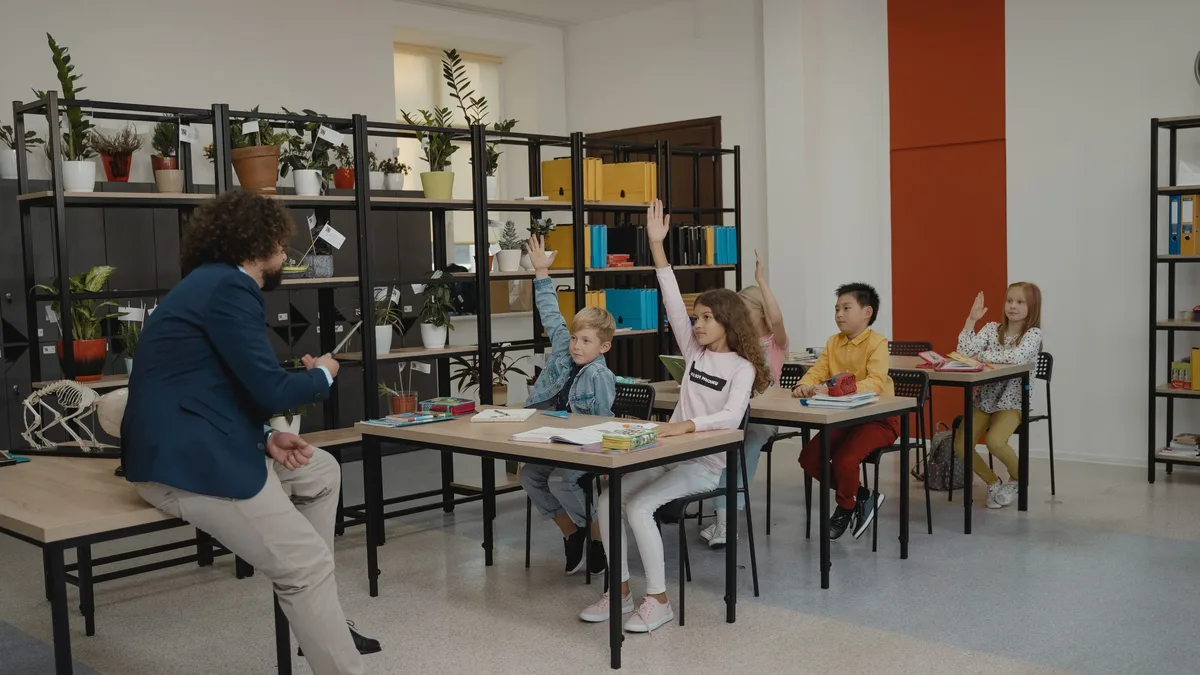
Teachers can build decoding skills even with very young children. They encourage a critical lens by asking, "What did we notice? What's good? What's different?" Showing a real giraffe after seeing an AI-generated one helps children spot differences.
A key warning is to never rely on autoplay. Even if one video is sound, the algorithm may queue inappropriate content next.
Supporting Parents' Efforts
Josefa Martinez, a preschool language teacher at the Park School in the Ossining district, provides guidance to families. She sends home weekly and monthly communications with vetted resources. "I try to find websites and resources they can use at home, videos that I have personally watched and that are interactive, engaging," she says.
Martinez also provides parents with follow-up questions to ensure active viewing. After a video about a firefighter, parents might ask, "How can a firefighter support our community?" After a numbers video, they could ask, "How many ways can we make the number five?"
"These questions make sure the child is actually engaged and not only sitting there mindlessly watching," Martinez explains. The questions align with her weekly or monthly classroom content.
Some school leaders are convening parents for discussions. "More schools are starting to have social media nights and AI evenings where they're inviting parents to really learn how to vet these videos," professor Keri Ewart says.
Ewart notes the challenge is recent for everyone. If children are expected to develop digital fluency in AI, teachers and parents must become digitally literate too.