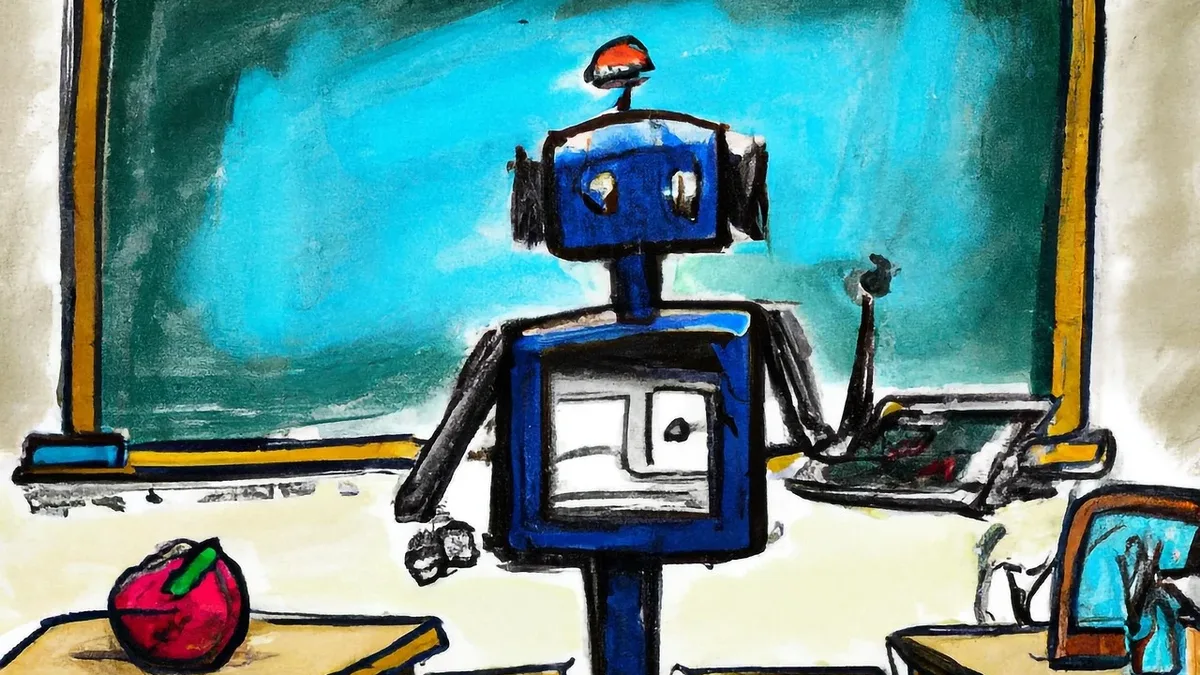
AI Literacy Tools Target Middle School
An education leader argues AI can help address the middle school reading comprehension crisis by providing scalable, individualized support that keeps
Only 30% of eighth graders were proficient in reading in 2024, the lowest level in 30 years. Dacia Toll, writing for EdSurge, states that artificial intelligence tools, if carefully designed, can help bridge this middle grades literacy gap by providing individualized reading instruction at scale.
For years, the U.S. has focused its reading crisis efforts on the early grades. This approach misses a major challenge: the "comprehension wall" many students hit in middle school. Students shift from learning to read to reading to learn. They can decode words but meaning breaks down with complex sentences, sophisticated vocabulary, or unfamiliar subject matter.
The consequences are severe. Students fall behind not just in English, but in science, social studies, and math. Their confidence erodes. Classroom diversity makes the challenge harder. Some students struggle to decode, others lack vocabulary or background knowledge, and some read far above grade level. The problem, Toll argues, is not a lack of educator commitment but a lack of scalable support.
How AI Tools Can Support Reading
Toll is skeptical of AI hype in education, especially suggestions that technology can replace teachers or curriculum. However, she sees middle school reading as one area where AI-supported tools can help if they strengthen instruction rather than shortcut it.
The opportunity lies in custom-built literacy tools based on the science of reading. These tools would use AI to diagnose student needs precisely, provide timely feedback, and help teachers differentiate support. The Brookings Institution found AI can either enrich or diminish learning, recommending schools use tools that "teach, not tell."
Schools should use AI to create better support for known student needs: more reading volume, more precise diagnosis, timely feedback, opportunities to revise thinking, and ways to access difficult grade-level texts. One major challenge is assessment. Reading comprehension is not a simple sequence of discrete skills. A student may master a standard in one unit but struggle in the next due to text complexity or unfamiliar vocabulary.
Well-designed AI tools can analyze students' everyday work, identify patterns, and give teachers clearer visibility into where comprehension breaks down. They can also aid differentiation. For instance, if students struggle with a complex article, AI could ask a targeted follow-up question, redirect them to a specific paragraph, or provide a vocabulary definition. This pushes students back into the text rather than away from it.
One teacher often cannot provide this real-time support to 26 students with different needs. Struggling readers are too often given watered-down materials instead of better access points to rigorous learning. Over time, the achievement gap becomes both a reading gap and a knowledge gap.
Early Results and Key Questions
Early results from pilot programs are promising. In one large urban district in Texas and another diverse district in Tennessee, middle schools using an AI-supported literacy model saw significantly stronger year-over-year growth on state reading assessments than comparable schools that did not use the model.
These examples suggest AI-supported intervention can help provide more responsive support at scale when aligned with strong instruction, grade-level content, teacher support, and consistent implementation. If AI becomes a shortcut or a substitute for high-quality instruction, it will fail students. If used mainly to complete assignments faster, it will weaken essential habits like reading closely, asking questions, and revising ideas.
Before adopting such tools, Toll urges educators and district leaders to ask hard questions.
The goal is not to make reading easier by removing cognitive work. The goal is to make rigorous reading more accessible so more students can participate. We cannot treat middle school reading challenges as an inevitable byproduct of earlier gaps, Toll concludes. For students told reading is something they should have already mastered, the right support could make all the difference.