Paraprofessionals And Support Staff
| Country of origin | United States |
|---|---|
| First created | 1960s |
| Original use | To provide instructional and non-instructional support in classrooms under teacher supervision |
| Typical roles | Teacher's aide, instructional assistant, library aide, special education support |
| Required qualifications | High school diploma minimum; often requires paraprofessional certification or associate's degree |
| Primary workplace | Public school classrooms, especially elementary and special education |
| Governed by | State education department regulations and district collective bargaining agreements |
Origin and history
The role of paraprofessionals in public education originated in the United States during the mid-20 century, emerging from federal initiatives aimed at addressing teacher shortages and providing targeted support. The widespread formalization of these roles accelerated in the 1960s and 1970s with legislation like the Elementary and Secondary Education Act (ESEA) of 1965, which funded programs requiring additional classroom support. The term "paraprofessional" itself was adopted to distinguish these trained aides from certified teaching staff while acknowledging their specialized duties. Support staff roles, including administrative, custodial, and food service personnel, have existed as long as schools themselves but became more professionally defined through collective bargaining and state certification frameworks in the latter half of the 1900s. The creation and regulation of these positions are deeply tied to evolving educational philosophies, legal mandates for inclusion, and local district operational needs. Their history is not of a single invention but of a gradual, policy-driven integration into the foundational structure of public school systems.
What it is for
Paraprofessionals and support staff exist to enable the core instructional and operational functions of a school district, allowing certified teachers and administrators to focus on their primary responsibilities. Paraprofessionals, often called instructional aides or paraeducators, provide direct student support under the supervision of a certified teacher, which can include individualized instruction, behavior management, and assistance with special education accommodations. They are crucial for implementing Individualized Education Programs (IEPs) and facilitating inclusive classrooms where students with diverse learning needs are educated alongside their peers. Operational support staff, including school secretaries, custodians, food service workers, and bus drivers, maintain the safety, cleanliness, nutrition, and daily logistics necessary for a functional learning environment. These roles collectively ensure compliance with state and federal regulations regarding student services, school safety, and accessibility. Their purpose is fundamentally to provide the necessary human infrastructure that sustains both the educational mission and the physical plant of a school.
Overview
Within a district governed by state policy, paraprofessionals and support staff constitute a diverse employee group with varying qualification requirements, job classifications, and supervision structures. State education agencies typically set minimum standards for paraprofessional hiring, such as passing a basic skills assessment or completing a certain number of college credits, often mandated by federal laws like the No Child Left Behind Act and its successors. District-level collective bargaining agreements frequently define specific job duties, hours, and pay scales for both instructional paraprofessionals and operational support staff. The daily work of a paraprofessional is highly contextual, ranging from providing one-on-one academic tutoring to managing classroom technology or supervising students during non-instructional time. Support staff roles are equally varied, with state policies influencing areas like food nutrition standards, transportation safety regulations, and facility health codes that dictate their work parameters. This workforce is integral to the district's operational budget, representing a significant portion of personnel expenditures outside of certified teaching staff.
What to know
State policy is the primary driver of paraprofessional certification or qualification requirements, and these rules can change with new legislative sessions, so districts must ensure ongoing compliance. Paraprofessionals are not certified teachers; their legal scope of practice is limited, and they must work under the direct supervision of a certified professional, a distinction with important liability and instructional implications. Funding for these positions is often precarious, as they may be tied to specific federal Title grants or state special education allocations, making them vulnerable to budget cuts or grant expiration. The professional development available to paraprofessionals and support staff varies widely by district, impacting job efficacy, morale, and career ladder opportunities. Understanding the chain of command is essential, as a paraprofessional typically reports to the classroom teacher and a head custodian reports to a facilities manager, creating multiple parallel reporting structures within a school. Districts are increasingly scrutinizing the effectiveness and deployment of paraprofessional support, with research indicating that poorly structured paraprofessional support can inadvertently increase student dependency.
Common questions
What are the typical educational requirements to become a paraprofessional in this state? Most states require a high school diploma and the passing of a formal assessment or the completion of two years of college coursework. How does a paraprofessional's role differ from a substitute teacher's? A paraprofessional is a continuous support role under a teacher's supervision, while a substitute teacher assumes full temporary responsibility for a classroom and requires different certification. Are paraprofessionals allowed to design lesson plans or lead a class alone? Generally, no; lesson planning and primary instruction are the legal responsibility of the certified teacher, though paras may implement prepared activities. What is the career progression for a paraprofessional? Many use the role as a stepping stone to become a certified teacher, often through tuition assistance programs, while others seek lead para or specialized instructional support roles. How are support staff hours and duties affected by school closures or early dismissals? These are typically governed by union contracts and district policy, with variations for essential personnel like maintenance staff during emergencies. Can a parent request a specific paraprofessional for their child? While parents can discuss preferences, assignment decisions are made by the school based on student needs, staff qualifications, and district resources.
Pros and cons
A significant pro is that paraprofessionals provide essential, flexible manpower that allows for individualized student attention and helps meet legal mandates for inclusion without overburdening the classroom teacher. They often bring valuable community and linguistic connections to the school, fostering a more relatable environment for diverse student populations. For the district, support staff ensure operational continuity and safety, handling specialized tasks from boiler maintenance to meal preparation that are beyond the scope of instructional staff. A central con is that poorly defined or supervised paraprofessional roles can lead to student over-reliance, segregation within the classroom, or the para effectively becoming the primary instructor for students with disabilities by default. These positions are frequently underpaid with high turnover, leading to inconsistent support and constant training demands that undermine program stability. Districts sometimes regret using paraprofessionals as a less expensive alternative to hiring more certified specialists, such as speech therapists or behavior interventionists, which can result in students not receiving adequately expert intervention.
Who it suits
This career path suits individuals seeking a meaningful role in education without immediately committing to a multi-year university teaching certification program. It is well-suited for those who derive satisfaction from providing direct, hands-on support to students and who thrive in structured environments with clear supervisory guidelines. People with strong interpersonal and patience skills, who can follow directions meticulously while also exercising initiative within defined boundaries, often excel in paraprofessional roles. Operational support staff roles suit individuals with specific technical skills, such as culinary training for food service or mechanical aptitude for maintenance, who prefer a school schedule and environment. The fields suit those who value job stability and benefits associated with public sector employment, though they must be comfortable with limited upward mobility without further education. It is less suited for individuals who desire full autonomy in their work, seek high compensation, or become frustrated by the bureaucratic constraints inherent in large public school systems.
Latest Paraprofessionals And Support Staff news
Latest reporting
Federal Investigations Target School Districts Over Abuse Failures
The U.S. Department of Education has launched civil rights investigations into multiple school districts, including New York City and Jefferson...
Federal agencies target LAUSD over gender identity policies
The U.S. Departments of Education and Justice are taking action against Los Angeles Unified School District for policies they say violate parental...

Tennessee Schools Miss Canceled Farm-to-School Grant
A federal grant that helped Tennessee schools buy local food was eliminated in 2025. New USDA programs offer equipment funding but lack direct food...
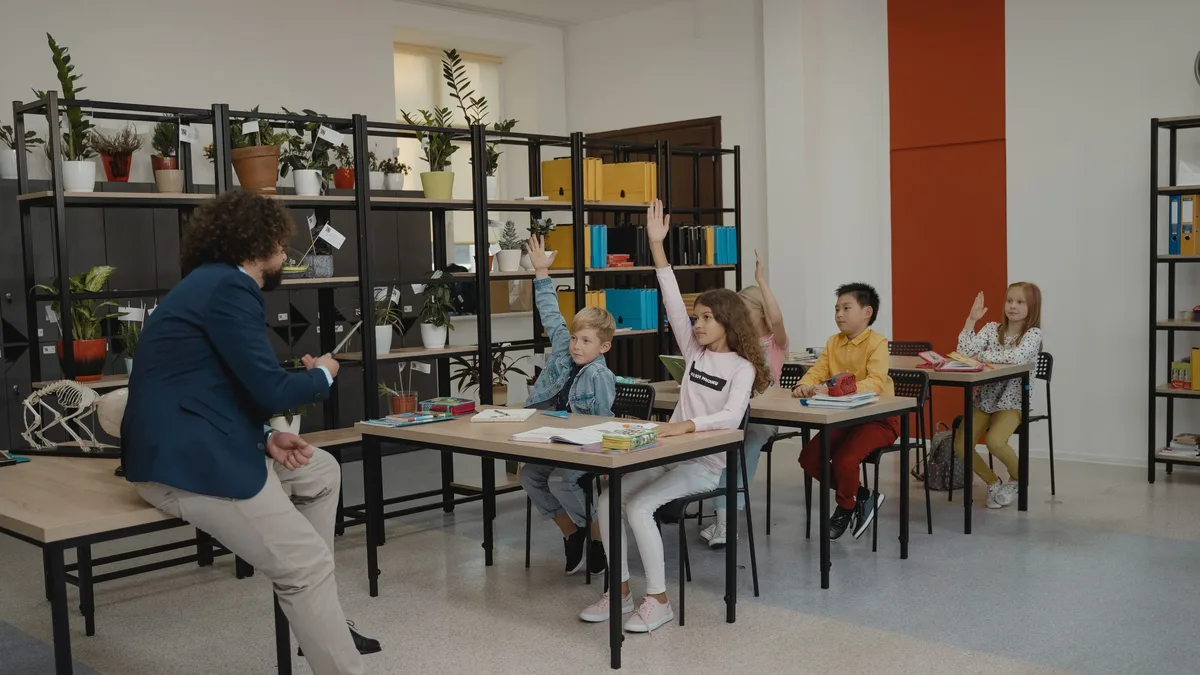
Teachers Face Wider Student Needs, Require Support
An educator argues that responsive teaching, adjusting instruction to student needs in real time, is essential but increasingly difficult to sustain.

University of Lynchburg Cuts Spark Student Degree Delays
A Hechinger Report analysis finds over half of four-year colleges show financial stress, leading to program and staff cuts.

Philadelphia ELA Curriculum Review Finds Phonics, Support Concerns
A Philadelphia School District review of its new $25 million K-8 English curriculum reveals teacher concerns over ineffective phonics instruction.