Utah School District Reports Critical Thinking Gains from AI
Jordan School District in Utah reports a 28% increase in student critical thinking skills after two years of using an AI tool as a 'thought partner,'
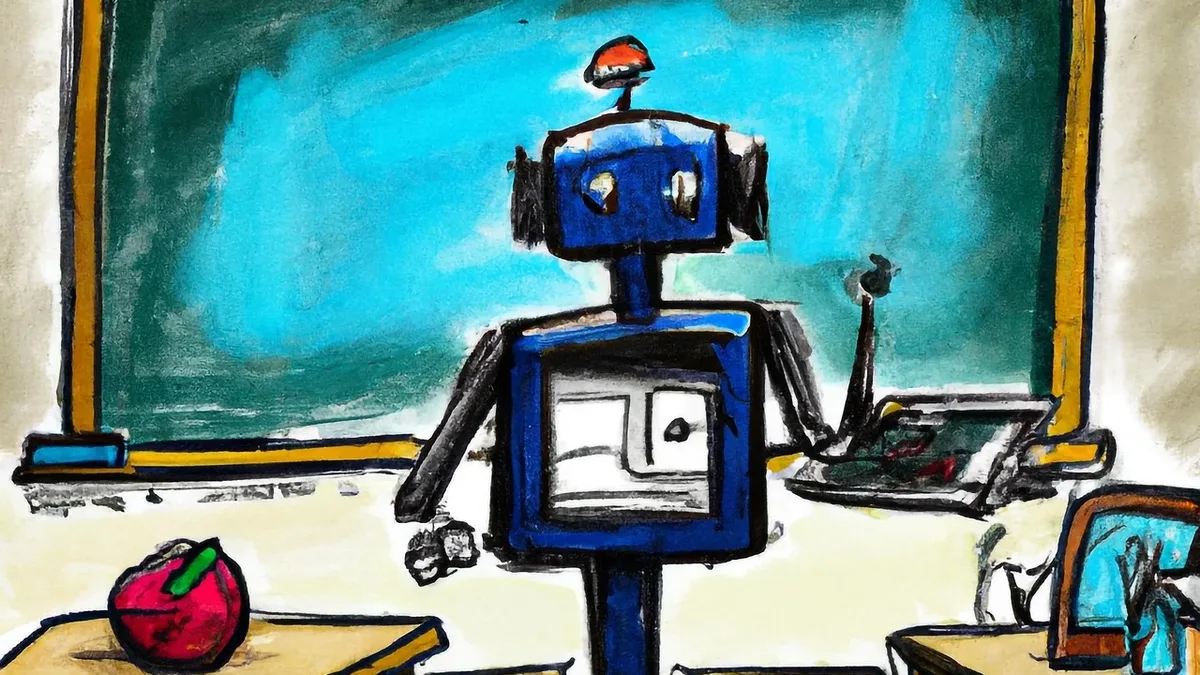
The Jordan School District in West Jordan, Utah, has recorded significant gains in student critical thinking after two years of using an artificial intelligence tool. According to a district case study analyzing nearly 14,000 student-to-AI interactions, critical thinking skills rose 28% and higher-level reasoning abilities more than doubled across subjects and grades.
Jared Covili, the district's digital teaching and learning administrator, told K12 Dive that the district views AI as an opportunity to deepen learning, not only a tool for teacher efficiency. "We're always looking for innovative practices for students to improve their learning," Covili said. He described the tool's ability to reveal student understanding as "the most revolutionary part."
AI as a Classroom Partner
Teachers in the district are using the technology to create a form of "classroom assistant." This approach aims to overcome the challenge of limited one-on-one time in secondary classrooms of 35 or 40 students. The AI can pose questions to every student, eliciting responses from the entire class.
"Not only the three or four kids that raise their hands," Covili explained. "A lot of kids are thinking about questions on a deeper level, and AI is helping us to see that." The intentional use of AI prompts moves beyond simple fact-sharing, pushing students to engage with underlying issues.
Establishing Guardrails for Use
While embracing the tool, the district has set strict boundaries. The framework treats AI as a thought partner for students, not a content creator. For teachers, it may act as a teaching assistant that gives a first pass at assessments, but the human element remains central.
"We don't want to turn over student writing to AI, or teacher interactions with students," Covili stated. "We want teachers interacting with kids' work. We want students creating their own work. We don't want AI bots grading the work." The goal is to use AI for assistance while maintaining essential human connections in the learning process.
A Contrast with Other Districts
The district's ongoing AI integration contrasts with policies being adopted elsewhere. Last week, New York City Public Schools announced a one-year ban on AI use for elementary and middle school students. Similarly, the Los Angeles Unified School District has restricted all student access to generative AI platforms for the 2026-27 school year.
Aligning with State Screen Time Limits
Jordan School District's AI deployment coincides with new Utah state legislation limiting screen time for elementary students, which took effect July 1. Covili sees no conflict. He argues parents want intentional technology use, not computers as time fillers.
The district ensures its technology use has strong curricular ties. "It's not only because we have it," Covili noted. The focus remains on academic activities where students can learn and grow together, with AI serving as a catalyst for deeper thought.