State AI Guidance Leaves Teachers Struggling with Cheating
A Chalkbeat review finds most state guidance for AI in schools avoids concrete steps to stop cheating, leaving teachers to spend their own money on detection tools without support.
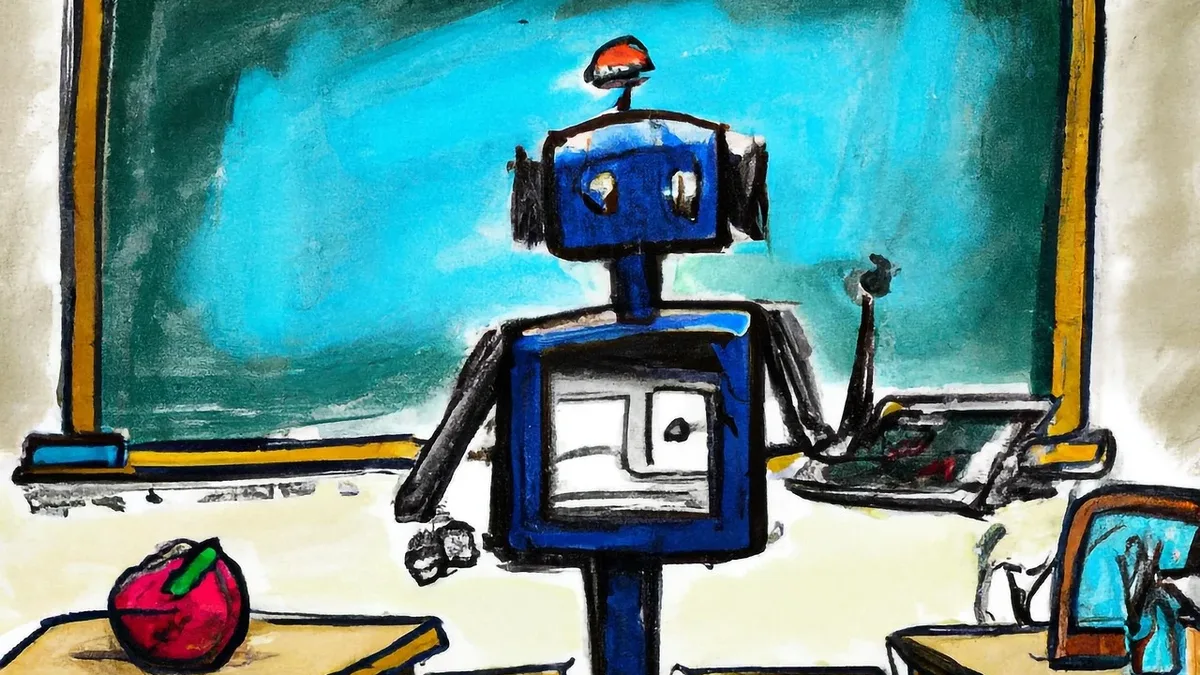
At least 13 states have passed laws about artificial intelligence in education, and roughly three out of four have published guidance documents. A review by Chalkbeat found these state resources largely skirt the issue of student cheating, offering little practical help for teachers. Instead, they focus more on AI literacy and how educators can use the technology for efficiency.
Teachers consistently identify AI-enabled cheating as a major concern. A Common Sense Media survey published last month found 70% of teens report using AI for schoolwork. Former teacher Paige Wyatt said students cheated so frequently she spent her own money on detection tools, yet she never received help on how to effectively catch and stop them. She quit her teaching job last year, citing AI's impact as a factor.
State Policies Avoid Tough Decisions on Integrity
State laws most often direct agencies and districts to create their own AI guidance, effectively absolving lawmakers from making tough decisions. The District of Columbia and at least 37 states have issued recommendations, ranging from short webpages to Illinois' 400-page document. These often define AI types and stress human-led use, but devote minimal space to academic integrity.
Justin Reich, a professor at MIT, said the documents seem light on actual guidance and lack citations. More than a third of states explicitly discourage relying solely on AI detection tools, citing their ineffectiveness and tendency to incorrectly flag genuine student work. However, many then offer little beyond suggesting districts create acceptable use policies.
Districts Forge Their Own Paths Amid Uncertainty
In the absence of clear state rules, teachers and districts are left to their own devices. Most of the nation's 10 largest school districts are developing or have developed specific policies to prevent cheating with generative AI. Half of those top districts explicitly discourage using AI detection tools. New York City delayed its AI guidance rollout for months amid backlash before announcing a new policy.
Local efforts are not always straightforward. In Virginia's Manassas City Public Schools, board member Sara Brescia proposed adding AI misuse to the student conduct code, with violations punishable up to expulsion. The board voted the idea down in late July. Another board member, Lisa Stevens, worried it would burden teachers without giving them tools to identify AI work.
Educators Rethink Assignments and Assessment
With no surefire way to detect AI-generated content and no agreed-upon definition of cheating, educators are reconsidering how they measure learning. Christopher Harris, director of a school library system in western New York, suggests writing may be less valid for assessment now that AI can suddenly write anything. He advocates for oral assignments or focusing on the learning process over the final product.
Teachers have reported requiring more graded work in class, using pencil and paper. Harris wants educators to understand they cannot control what students do with AI. The only control they have is their agency in developing assignments, he said.
Former U.S. Education Secretary John King, now chancellor of SUNY, called AI a present-day problem. Paige Wyatt, the former teacher, argues for concrete support. She noted students are becoming more fluent in cheating methods, using tools to disguise AI-generated writing. Wyatt is open to returning to the classroom only if she gets more administrative support to handle AI misconduct.